BBQ Chickpea Plate

Portland Prasad BBQ Plate
BBQ Plate at Prasad in Portland

By Lisa Rimmert, Director of Development

I recently had the pleasure of visiting Portland for the first time, to meet with many wonderful Vegan Outreach donors there. Of course I had a long list of restaurants and shops to visit too, as everyone knows Portland is a haven of vegan goodness. I had some expected favorites, like Vtopian Artisan Cheese shop, Portobello, and a few others. But one place I ate surprised me and stood out.

Diane, an awesome VO donor, suggested Prasad, a little cafe inside a yoga studio, and I’m so glad she did. I ordered the BBQ Plate, made with barbecue chickpeas, jalapeño cornbread, millet, and steamed greens with jalapeño cashew cheese. It was one of my favorite meals in Portland, and that’s really saying something!

When I arrived home in Denver, I knew I had to recreate the meal. I made a couple changes due to laziness–using buckwheat instead of millet, because I had that on hand, and not including jalapeños in the cashew cheese. It was delicious! I made the dish for my parents, too, using farrow as the grain, and without nutritional yeast (a vegan sin, I know, but it’s hard to find where they live in rural Illinois!). It was delicious once again! I hope you make it and enjoy it even half as much as I did!

BBQ Chickpeas & Kale

Ingredients:

  • 1-1/2 cups dry buckwheat, farro or rice
  • 1/4 cup raw cashews*
  • 2 Tbsp nutritional yeast
  • 2 tsp cumin
  • 1 tsp garlic powder
  • 1/4 cup plant milk, unsweetened
  • 1 bunch of kale
  • 2 cans chickpeas
  • 2 tbsp oil for frying
  • 2 Tbsp oil for sauteing
  • 1/4 cup of your favorite barbecue sauce

Preparation:

  1. Cook the buckwheat, farro, or rice according to directions.
  2. Blend cashews* thoroughly in a food processor with the nutritional yeast, cumin, garlic, and half of the milk. Add more milk as needed so it’s smooth and creamy. Set aside.
  3. Meanwhile, rinse the kale in a strainer, squeeze out the water, and remove stems. Cut into bite-sized pieces.
  4. Heat a large frying pan on medium and add a tablespoon of oil. When hot, add the kale. Stir as needed until soft, about 5 minutes. Set aside.
  5. Return pan to medium heat, add a tablespoon of oil, and when hot add the drained chickpeas. Stir so they don’t stick and when heated through stir in the bbq sauce and turn off pan.
  6. Serve the kale and chickpeas over the grains with the cashew cream sauce drizzled on top.

*It’s best, but not required, to use soaked cashews. They can be covered in water and soaked overnight in the fridge, or quick-soaked in the microwave, on the stovetop, or covered with boiling water. Let stand for 20 minutes before draining and using.

Tips for Tabling

By Lori Stultz, Outreach Coordinator

Last week, in celebration of students’ return to school, the folks at Vegan Outreach offered a few helpful pointers for leafleting.

Today we wanted to discuss a similar form of activism: tabling. Like leafleting, tabling can be an effective way for students to educate others about factory farming and other animal abuse related issues. It provides a great platform to engage in conversation and offer information and advice on how others can most effectively help prevent animal suffering. That is, through reduction of their meat and dairy consumption.

Most often, tabling is done as a group activity (perhaps with an animal advocacy group on campus), but it can also be done solo. Before setting up a table on campus, though, you will need to check in with the campus student activities center to find out where and when you can table on campus. Many campuses have designated locations and times that are acceptable for tabling.

Whether you’re by yourself or with a group of animal-loving friends, your information will be more compelling if you keep these things in mind:

Appearance and Displays

  • Personal appearance is crucial! Instead of dressing in counterculture attire, which may send the message to your audience that your worldview is radically different from theirs, dress conservatively. Be clean and well-groomed. This will prevent your audience from assuming that you’re not relatable.
  • Make sure your visual displays clearly and simply relay your message. Think big pictures and big words—limit the amount of small text on your display.
  • Limit your available materials to one or two issues. Don’t overwhelm your audience by offering literature on five or six different issues. And when laying literature out on the table, fan it in a straight row (instead of a semi-circle). This detail may seem insignificant, but it will drastically increase the rate at which your audience picks up the literature and reads it.

unnamed (1)

Conversation

  • Actively listen to your audience members. Acknowledge their valid points and observations and ask thought-provoking questions. Find issues that you agree on (common ground). They are much more likely to listen if you’re coming from a place of commonality instead of difference.
  • If your audience says they are unable to make a lifestyle change (e.g., “I could never give up meat” or “I could never afford to go vegan/vegetarian”), offer your personal experience of the lifestyle changes they are concerned about. For example, if someone claims that he or she could never give up meat, you could respond by saying, “I used to feel the same way, and at first, I just cut back on meat. Now that I’m vegan, I’ve found that I really don’t miss meat. In fact, I feel good about my diet and am more at peace with the world around me.”
  • Refrain from getting into an argument. Some audience members may try to start an argument by saying something rude or obnoxious. They are usually doing this because they are uncomfortable with their own emotions in relation to the topic. Therefore, rather than reacting hastily, simply smile and wish them a good day. Remember that you’re the spokesperson for the animals.

Keeping these points in mind will ensure a successful tabling experience! And be sure to visit the Vegan Outreach website to find accurate and useful information regarding animal-related issues and tips for how to go veg. You can also order literature to use at your table through our website!


Helping Animals in Vietnam | Amplifying Impact in India

I’m delighted to share that our India team has successfully reached 90% of our annual goals for both the Green Tuesday Initiative and the Adopt A College program. Our focus has been on expanding and amplifying our impact. Here’s how we’ve been accomplishing these objectives

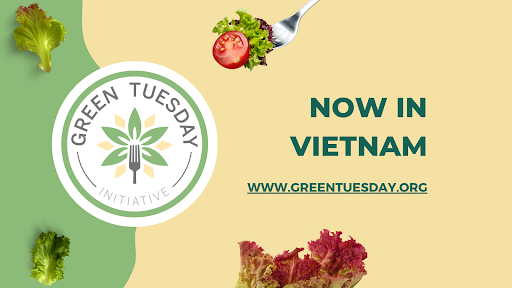
Expanding the Green Tuesday Initiative to Vietnam


We are pleased to announce the expansion of our Green Tuesday Initiative to Vietnam. Over the past six years, we’ve successfully replaced 3.3 million pounds of animal products with plant-based alternatives in India, and we are hopeful to create a similar impact in Vietnam as well.

Our Plan of Action:

  • We started working with over 100 educational institutions and corporations in Vietnam, advocating for the implementation of the Green Tuesday Initiative on their campuses.
  • We are also working to partner with local publications to promote our message and increase the visibility of our campaign.
  • Our goal is to reduce the consumption of 44,000 pounds of animal products by the end of 2023.lso working to partner with local publications to promote our message and increase the visibility of our campaign.

    We Are Now Presenting our Webinars in Six Languages!


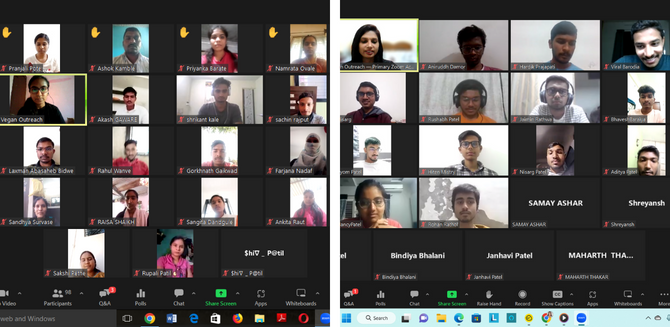
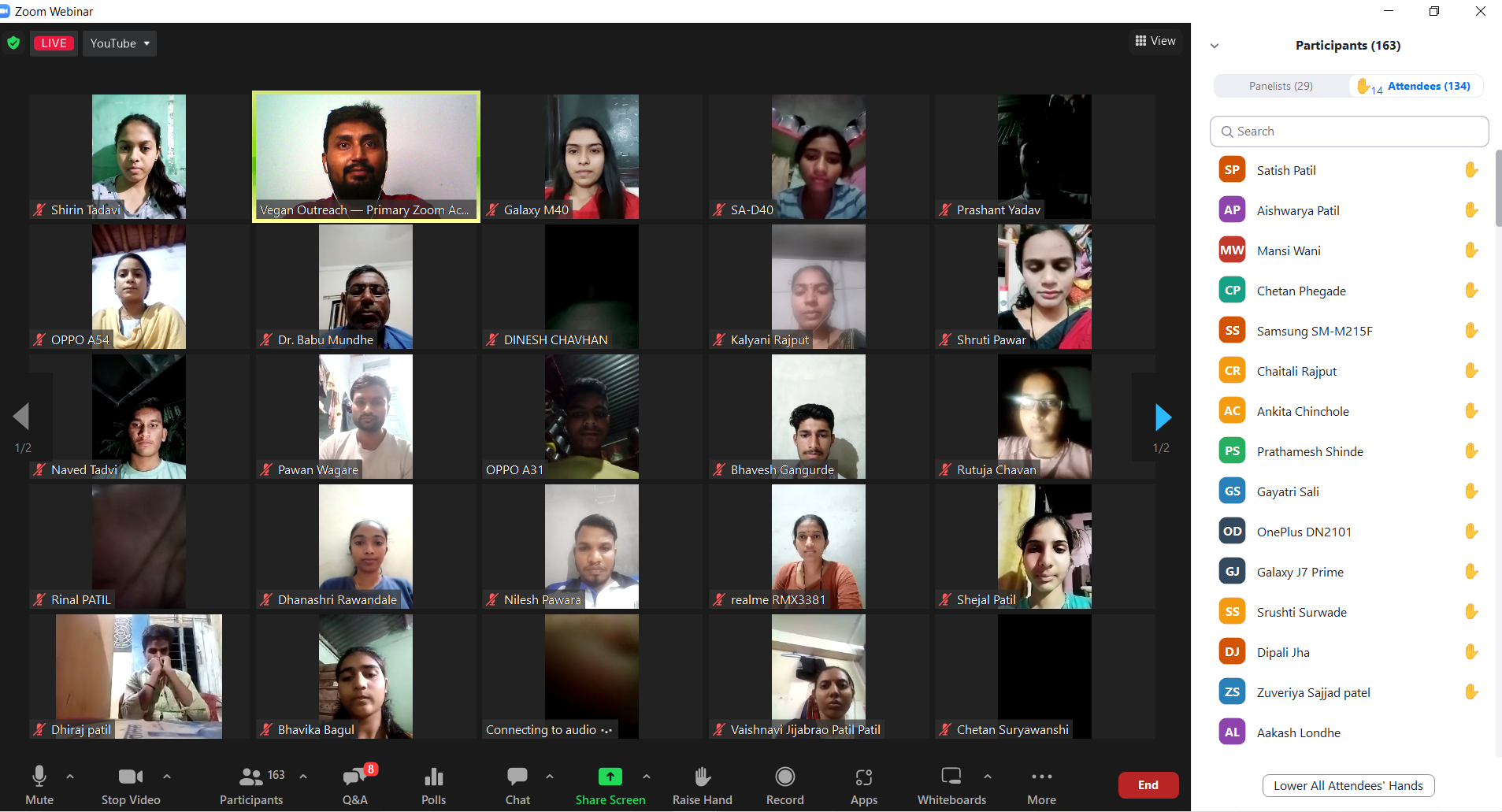
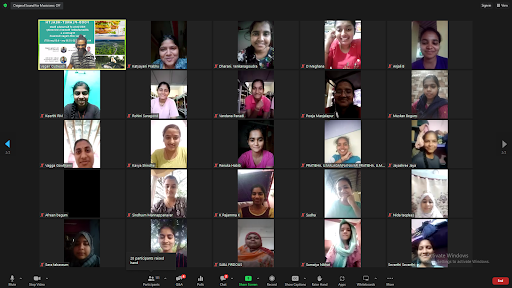
    Ajith K, our outreach coordinator with Karnataka State Akkamahadevi Women’s University students, on August 04, 2023. He delivers the webinar in English and Kannada languages.

    Key Highlights:

  • Over 17,000 students signed up for our 10 Weeks to Vegan series last quarter.
  • We organized Adopt A College webinars in over 40 universities and colleges.
  • Our multilingual approach is amplifying our impact––ensuring that our message resonates with a diverse audience. We now deliver our webinars in English, Hindi, Gujarati, Bengali, Kannada, and Malayalam.

    Meet Sarani Bhattacharya (Pronounced as Sha-ro-ni) (She/her)


    Sarani is a passionate plant-based nutritionist dedicated to promoting a compassionate and sustainable lifestyle. She joined Vegan Outreach as an outreach coordinator, and during her first three months, she has already inspired 7,000 students to try the 10 Weeks to Vegan program.

    Thank you for helping us create a compassionate world for animals. Your support allows us to maximize our impact. Kindly consider becoming a monthly sustainer to enable us to reach our full potential and expand the scope and reach of our programs

    Become Our Monthly Sustainer


    With gratitude,

    Richa Mehta,
    Director of Programs, India


  • Soy coffees in corporates | 23K+ students trying vegan

    In the second quarter of 2023, our programs in India have reached new milestones, thanks to your unwavering support. Here are some exciting updates:

    456,790 kgs/ 1,007,050 Pounds of Animal Products Reduced!

  • We have reached 91% of our annual goal with 6 more months to go!
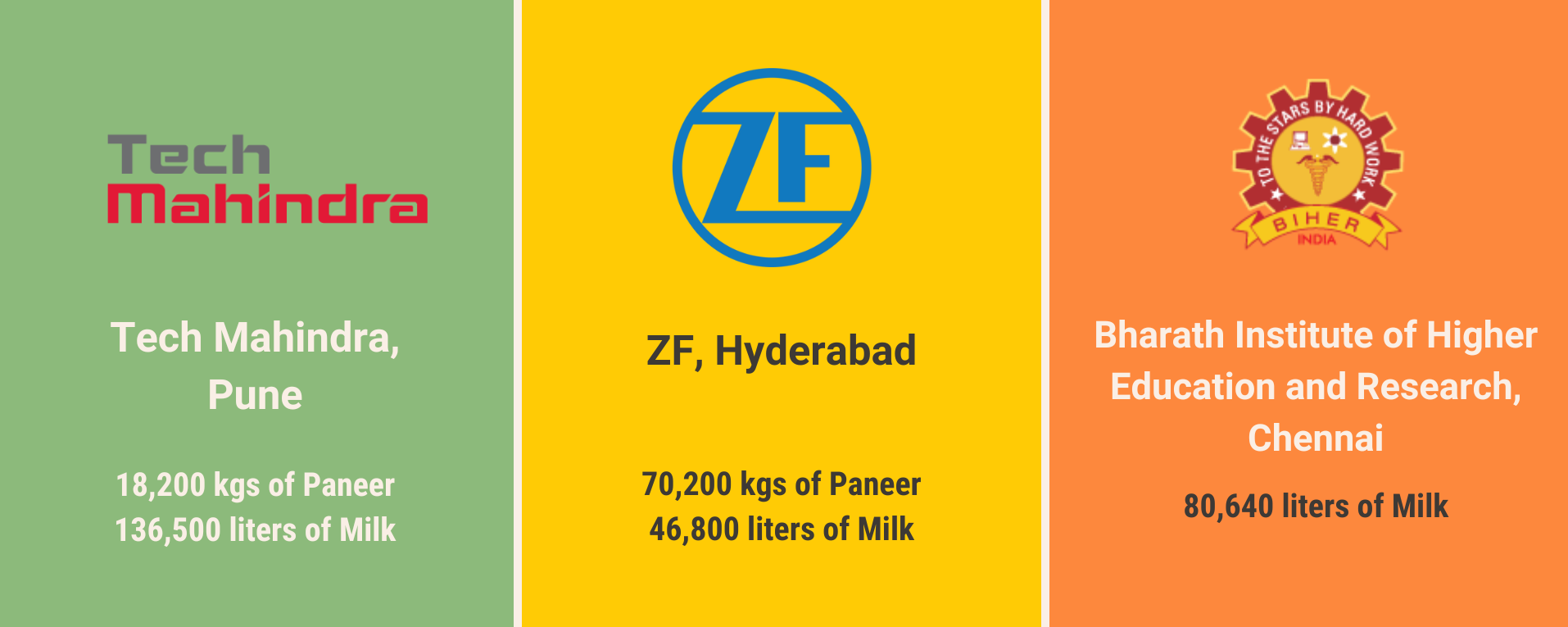
  • We reduced 88,400 kgs/194,889 pounds of paneer and 263,940 liters of milk, marking the highest dairy reduction achieved in a quarter. Tech Mahindra agreed to reduce 18,200 kgs/ 40,124 pounds of paneer and 136,500 liters of milk in the second phase of reductions. They will also offer soy milk to their staff as an alternative to milk.

  • We are also excited to share that we will soon launch the Green Tuesday Initiative in Vietnam, expanding our impact further.

    Our Latest Successes

    23,000+ Students Are Now Trying Vegan

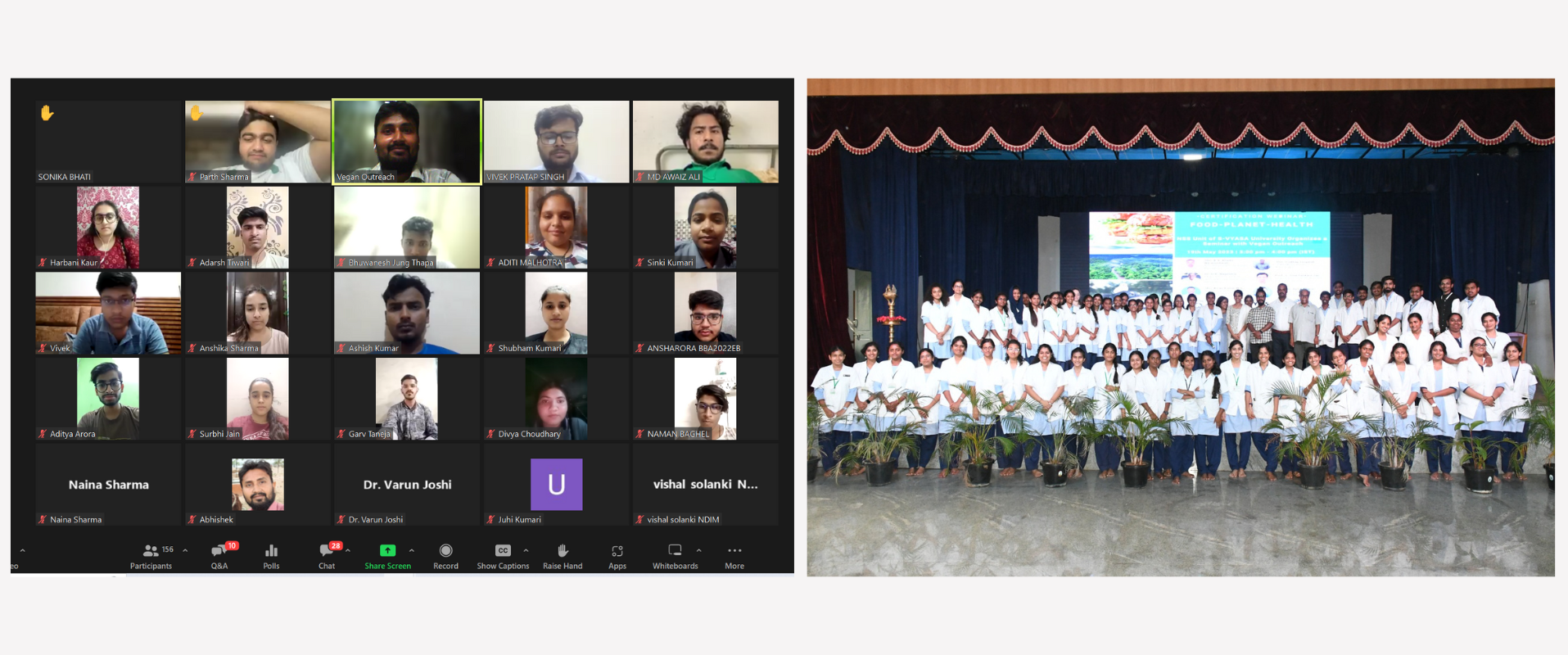
  • 23,664 students signed up for the 10 Weeks to Vegan challenge through our Adopt a College webinars.
  • Collaborated with 800+ colleges and organized 76 webinars to raise awareness about animal rights, shedding light on the issue of speciesism.

    Learn More

    Meet Nija

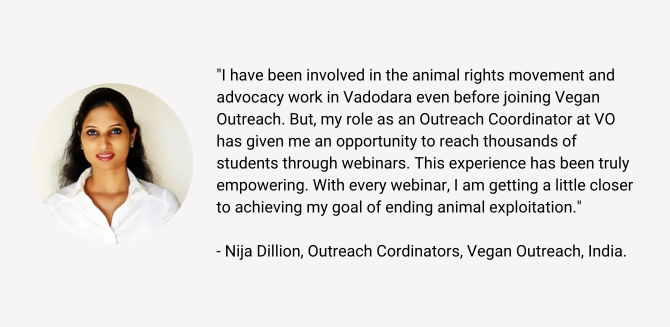
    Nija Dillon has joined the India Outreach team as the Outreach Coordinator of Gujarat. With her dedication, she has successfully signed up 6,971 students to our 10 Weeks to Vegan program and organized engaging Food Planet Health awareness webinars with more than 100 colleges. Nija’s commitment to creating positive change is truly inspiring.

    Your support has been instrumental in enabling us to hire the right talent and to achieve these remarkable milestones. Help us make an even greater impact by becoming a monthly donor—monthly gifts help save more animals all year long.

    Become Our Monthly Sustainer


    With gratitude,

    Richa Mehta,
    Director of Programs, India


  • Vegan Ceviche

    Pura Vida, Costa Rica!

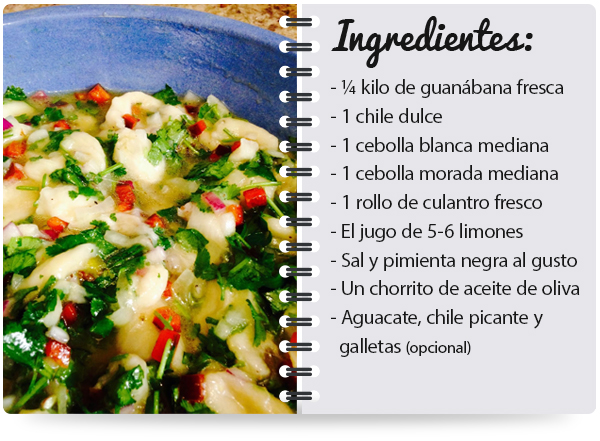
    We’re so excited to share with you that we’ve just launched our newest 10 Weeks to Vegan program for Latin America, Semanario Vegano Costa Rica! With the support of local activists, it has been possible to create a culturally relevant program that will provide support to those who want to give veganism a try. Here is a vegan take on a traditional fish-based dish!


    The original version of this is made with soursop, which is native to tropical areas of the Americas. Since it is difficult to find in the United States, we have substituted oyster mushrooms. Let us know what you think!

    Ingredients:

    • 250 grams of chipped oyster mushrooms (approx 2-1/2 cups)
    • 1 pepper
    • 1 medium white onion
    • 1 medium purple onion
    • A handful of cilantro (coriander)
    • The juice of 5-6 limes
    • Salt and pepper to taste
    • 1 teaspoon of olive oil
    • Avocado, chili pepper, and crackers

    Directions:

    Start by slicing the mushrooms in a shape that you like, finely chop the onions, and the sweet pepper, dice the cilantro and place everything in a bowl. Add the olive oil, salt, and pepper to taste and mix well. Squeeze the juice of 5-6 limes—it should be enough to cover part of the ingredients. Make sure everything is well mixed and let the ceviche bowl sit in the fridge for at least 30 minutes, this will intensify the flavor. Once you’re ready to eat it, add avocado on top and eat it with crackers.

    Tip:

    You can also change the base of this recipe with chickpeas, hearts of palm (palmitos), cauliflower, or texturized vegetable protein (TVP). If you miss the taste of seafood, try adding chopped seaweed, you’ll notice that this will make a huge difference!


    Our Best Q1 so Far, and Here’s Why!

    I’m excited to update you about the first quarter of 2023. We did webinars with 200 colleges, reduced 220,462 pounds of meat and dairy through Green Tuesday successes, organized workshops for our GT partners, and more!

    We can inspire more vegans and end animal agriculture with your support. Become our monthly sustainer today!
    Donate Today

    200 Colleges Joined the Food Planet Health Webinar Sessions!


    In the last quarter, our outreach team organized three outreach tours in three different states of India and educated students about speciesism.

  • 200 colleges participated in the webinars.
  • 6000+ students joined the 10 Weeks to Vegan program.

    Learn more

    Our Green Tuesday Initiative Successes

    Hyderabad EV week:

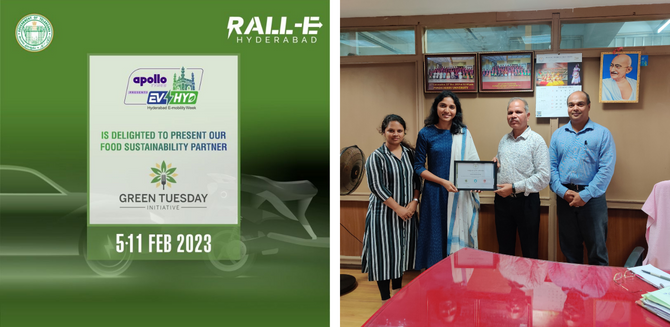
    We partnered with Hyderabad EV Week, a kickoff week before the Hyderabad Grand E Prix. Plant-based food was served at their marquee events, such as Rall-E Hyderabad, EV Summit, and the Mobility startup challenge.

    Q1 Pondicherry tour is a success:

    Pondicherry University(PU), one of India’s most prominent universities, will reduce 125,002 pounds of chicken and 104,168 pounds of dairy consumption annually.

    PCRM collaboration with Green Tuesday Initiative:
    Hundreds of employees from Tech Mahindra and Incture Technologies joined the workshop organized by Green Tuesday and Physicians Committee for Responsible Medicine(PCRM).

    Our Latest Successes

    Building an Online Community for New Vegans!

    In the last quarter, our outreach team organized three outreach tours in three different states of India and educated students about speciesism.

  • The 10 Weeks to Vegan website helped more than 11,000 people with resources and information about veganism.
  • Our online communities on Facebook, Instagram, and Telegram are helping more than 5,000 people in their transition.

    We could do all these only because of you. Thank you for supporting our important work. Share our newsletter within your network and inspire your friends to help animals!

    Share it over email


    With gratitude,

    Richa Mehta,
    Director of Programs, India


  • Pasta With White Sauce

    By Frederico Maciel de Mello

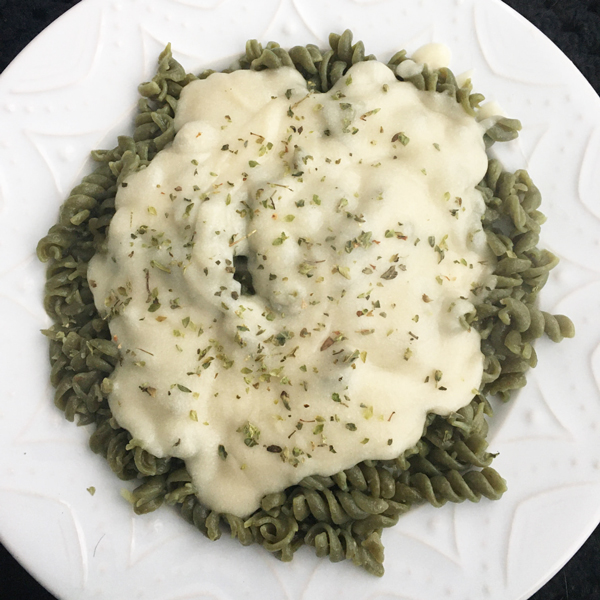
    I’m not a super cook so I like easy recipes. Here is one of my favorites.

    Ingredients:

    • 4 tablespoons of vegan butter or olive oil (with vegan butter it is much tastier)
    • 4 tablespoons of wheat flour
    • 500 ml of cashew nut milk (you can use unsweetened milk, but cashew nut milk is great because it has a neutral flavor)
    • Salt, black pepper and nutmeg to taste.

    Directions:

    •  In a heated pan put the butter and let it melt. Add the flour and stir for about 2 minutes with the help of a spoon or spatula
    • Add the milk all at once and, with the help of a wire whisk, mix well until it boils
    • Put the fire down and let it cook for about 5 minutes, stirring from time to time
    • Finally, season generously with nutmeg, salt and black pepper
    • Yields approximately 400 grams of sauce
    • Add to your favorite pasta and enjoy!

    Our goals for 2023!

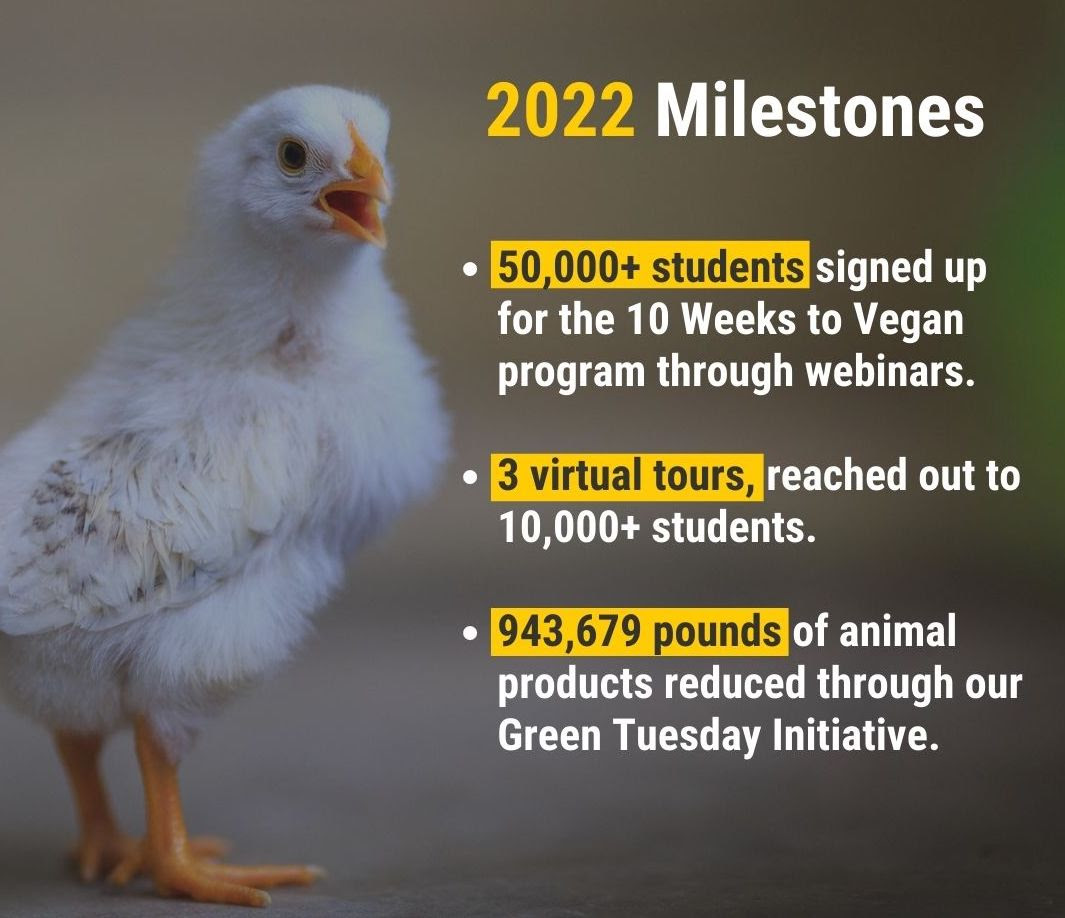
    We did incredible things in 2022 with the support of our generous donors and hardworking staff. We have even bigger goals for 2023, and we need you more than ever!

    Our goals for 2023

    Here’s the difference your contribution can make in 2023:

  • Inspire 50,000 new students to sign up for the 10 Weeks to Vegan Program in India.
  • Reduce 992,080 pounds of animal products – 694,456 pounds of meat and 297,624 pounds of dairy products.
  • Expand the Green Tuesday Initiative to Vietnam.


    We couldn’t have done it without you!

    We exceeded both our outreach and Green Tuesday Initiative goals in 2022. Here’s what we achieved with your support.

    Vegan Outreach is possible because of YOU—together, we can stop animal suffering by helping people go vegan.

    Donate Today


    With gratitude,

    Richa Mehta,
    Director of Programs, India


  • Leafleting with Vegan Outreach—Australia and New Zealand

    By Sam Tucker, Australia and New Zealand Outreach Coordinator

    Sam Tucker

    Ever since I first learned about the suffering of animals in factory farms and slaughterhouses, I’ve wanted to do more to help than just change my diet. Don’t get me wrong, simply eating vegan or vegetarian does make a huge difference—in fact, going vegetarian represents sparing about 35 mammals, birds, and fish every year. But if we can inspire just one other person to change their diet, we’ve already doubled our impact for animals!

    Through advocating for others to adopt a more compassionate diet, we can save thousands of more animals than we ever could have through changing our own dietary choices alone.

    I’ve been vegan for more than eight years, and since then I’ve been involved in many different forms of activism, including organizing and attending protests, hosting an animal rights radio show, creating YouTube videos, and running websites. But of all the forms of activism I’ve been involved in, I’ve found leafleting at universities with Vegan Outreach to be one of the most fun, easy, and effective ways to inspire people to adopt a compassionate diet.

    Almost every day that I leaflet, people tell me they want to go vegan or vegetarian after reading about the horrors of factory farming. A study conducted by Farm Sanctuary in 2013 found that about 1 in 50 students who receive a leaflet go vegetarian or pescatarian. You could spend just one hour leafleting, hand out 100 leaflets or many more and there could be many new vegetarians!

    Considering that the average meat-eating person will eat about 2,000 animals in their lifetime, that one hour of leafleting has the potential to spare thousands of animals.

    Sam Tucker

    As well as being an effective way to save animals, leafleting is also easy to do! Most people simply take a leaflet and say, “thank you” or don’t take a leaflet and say, “No, thank you.” The people who stop to talk are usually doing so to ask questions about going veg or to tell you that they’re already veg. Overall, I’ve found that the general reaction from the public is very positive.

    Virtually everybody is against animal cruelty. Most people simply don’t realize how much cruelty and suffering is inherent in the production of food made from animals or how easy it is to replace animal food products in your diet. When we educate people about this in a friendly, positive, and non-confrontational way, they’re very often receptive to our message.

    So, go ahead and give leafleting a shot!

    Visit this page for more information.


    7000+ students in 1 month | 1.1 million pounds of animals products reduced

    This year our focus has been strengthening foundations and building long-term relations with key stakeholders and organizations. It all paid off in getting closer to our goals and helping animals in India. Here’s how.

    Adopt A College Virtual Tour in Two States

    We collaborated with the Ministry of Youth Affairs, an entity of the Indian government, early last quarter to conduct nationwide webinars in association with the National Service Scheme (NSS).
    We leveraged this collaboration to organize two virtual tours with universities in Maharashtra and Karnataka.

    Highlights include:

  • 13 webinars with 106 colleges
  • Reached 7,000+ students
  • 6,631 students signed up for 10 Weeks to Vegan

    Our Journey with Tech Mahindra

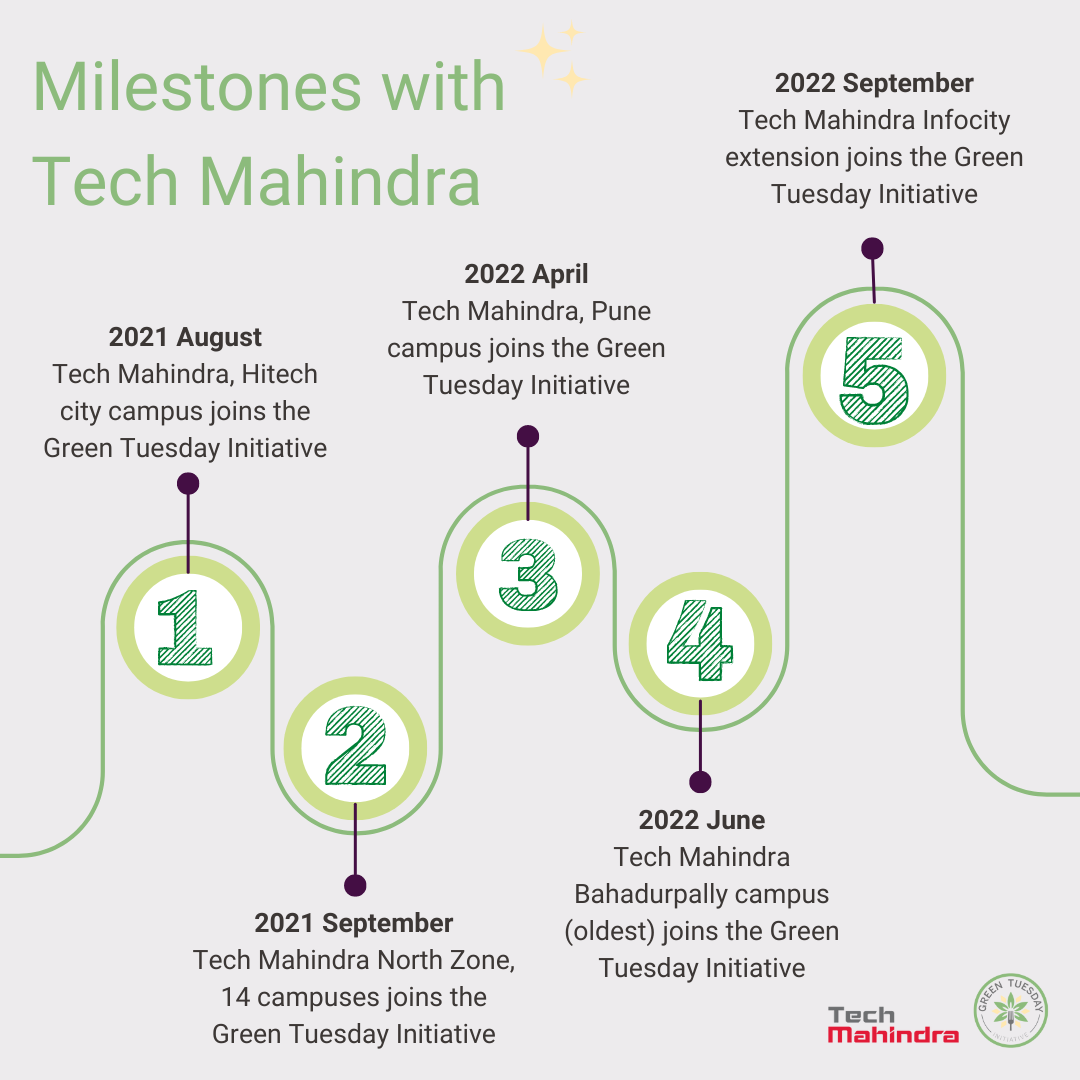
    Our journey with Tech Mahindra, a tech giant in India, started in August 2021 with one campus in Hyderabad. We have continued to engage with their teams across India and expanded the Green Tuesday Initiative to 18 campuses in 7 locations so far.


    Highlights include:

  • 0.5 Mn kgs/1.1 Mn pounds of animal products prevented from being served. 18 campuses of Tech Mahindra joined Green Tuesday Initiative
  • Organized 2 awareness workshops for India and global facility teams

    Senior Campaigns Manager Part of Government Sustainability Committee

    Bhavya Vatrapu from our India team is now part of the Telangana government’s strategy team for sustainability initiatives. It’s a core working group set up by the IT department to promote sustainability initiatives in the state. Other members in the core group include sustainability team members from HSBC, Microsoft, HYSEA, CCI, and other government officials.
    This will open up opportunities for Bhavya to interact with industry leaders and key companies and introduce them to food sustainability.

    Thank you for believing in a better future for animals and enabling this important work.
    We can inspire more vegans and end animal agriculture with your support.

    Donate Today


    With gratitude,

    Richa Mehta,
    Director of Programs, India